A tyre blowout at highway speed is not a normal roadside inconvenience. For a truck, tipper, trailer or loaded commercial vehicle, it can quickly become a fight to keep the rig straight, protect other road users and avoid damage to the load. Knowing how to handle a tyre blowout before it happens gives you the best chance of getting safely off the road and reducing costly downtime.
The key is simple: stay calm, keep control of the steering and avoid any sudden reaction. The noise, vibration and pull can be severe, particularly when a front steer tyre fails, but hard braking or sharp steering can turn a tyre failure into a serious incident.
What a truck tyre blowout feels like
A blowout does not always sound like a loud bang. You may hear a thump, flapping or repeated striking under the guard. The truck may pull sharply to one side, the steering wheel can shake, and the vehicle may feel heavy or unstable. On a drive or trailer axle, you may first notice vibration, a change in handling or the trailer beginning to move differently behind you.
A front steer tyre blowout generally demands the fastest, most controlled response because it affects directional control. A rear, drive or trailer tyre failure can still be dangerous, especially with a full load, dual tyres, uneven road surface or traffic running close beside you.
Do not assume you can keep travelling because a dual tyre is still holding some weight. The remaining tyre can overload and fail, damaged rubber can strike brake lines or guards, and the vehicle may be unsafe or illegal to operate.
How to handle a tyre blowout: the first few seconds
Your response in the first few seconds matters more than anything that happens afterwards. Keep both hands firmly on the wheel and look well ahead, not down at the dash or mirrors. The truck will follow your steering inputs, so give it calm, measured direction.
Hold the wheel and resist the urge to brake
A sudden tyre failure can pull the truck left or right. Hold the steering wheel securely and counter the pull gradually to keep the vehicle in its lane. Do not yank the wheel back. A sharp correction can cause a loaded truck or trailer to sway, cross lanes or lose stability.
Avoid stamping on the service brakes. Heavy braking shifts weight forward and can make a steer-axle failure harder to manage. It can also unsettle a trailer, particularly on wet roads, loose shoulders or downhill sections.
Ease off the accelerator
Take your foot off the accelerator smoothly and allow the truck to slow naturally. If you need to maintain control against a strong pull, a very brief, gentle application of power may help keep the steering responsive before you ease off again. This depends on the vehicle, road and which tyre has failed, so the priority remains control rather than speed reduction.
Keep the engine brake and retarder use measured. Aggressive retarder settings on a slippery road can upset the vehicle, especially when the tyre failure has already reduced traction.
Signal only once the truck is stable
When you have control, activate your indicators and hazard lights as appropriate. Check mirrors carefully, but keep your main focus on the lane ahead. Other drivers may not realise what has happened, and a trailer can occupy more space than usual if it is moving unevenly.
Move towards a safe stopping area only when there is enough room to do so gradually. A wide shoulder, truck bay, rest area or level access road is far better than forcing the vehicle onto a narrow verge.
Pull over without creating another hazard
Bring the vehicle to a controlled stop as far from live traffic as conditions allow. On the M1, Hunter Expressway, Golden Highway or other busy freight routes, the safest option may be to continue slowly to a suitable refuge rather than stop immediately in a travel lane. This is a judgement call. If the truck is pulling violently, losing control or shedding tyre debris, reduce speed and stop as soon as it can be done safely.
Choose firm, level ground wherever possible. Soft shoulders can swallow a loaded truck, make jacking dangerous and create another recovery problem. Avoid stopping around blind bends, crests, narrow bridges or where traffic has little warning.
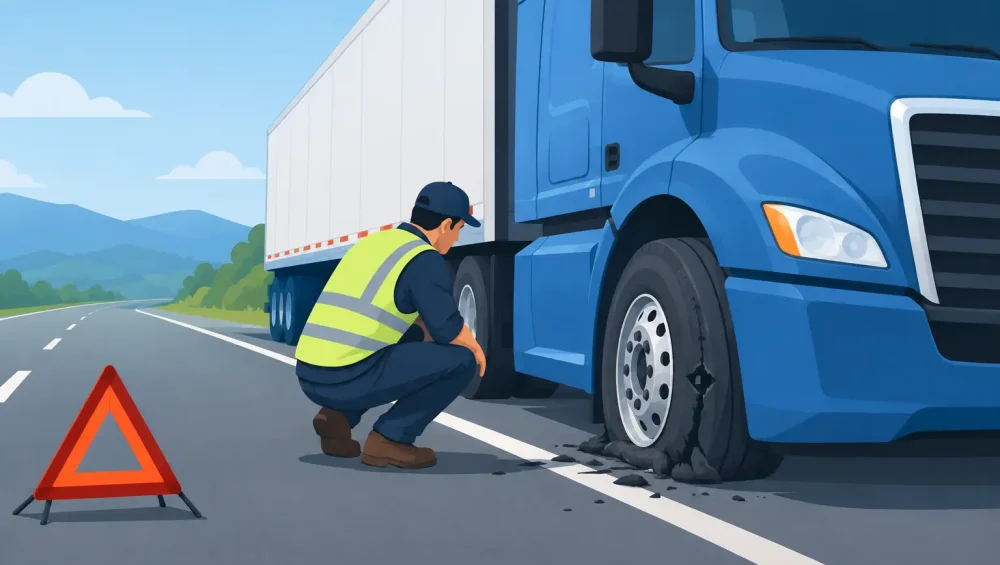
Once stopped, apply the parking brake, select the appropriate gear and secure the vehicle according to your company procedure. If you need to leave the cab, use high-visibility clothing and stay alert to passing traffic. Do not stand between the truck and traffic, and do not inspect a tyre from the live-traffic side.
Do not try to nurse a destroyed tyre
A tyre that has come apart can damage more than the casing. Check from a safe position for loose tread, torn mudguards, damaged airlines, exposed wiring, rim damage or signs that another tyre has been overloaded. If a tyre has failed on a dual assembly, the companion tyre may have been carrying excess heat and weight before you stopped.
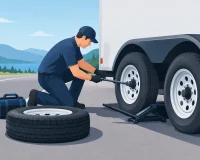
Do not attempt a roadside repair if you are not trained, equipped and in a protected location. Truck wheels, split rims, high-pressure tyres and heavy vehicle jacking all carry serious risk. A quick fix is not worth an injury, a damaged wheel or a second failure a few kilometres down the road.
For owner-drivers and fleet operators, the practical move is to arrange a qualified mobile tyre technician who can assess the full assembly, fit the right replacement tyre and get the vehicle safely moving again. Hunter Mobile Truck Tyres provides 24/7 mobile blowout recovery and tyre support for trucks, trailers and commercial vehicles across the Hunter region, including roadside locations, depots and job sites.
Give the tyre technician the right details
Accurate information helps a mobile tyre service arrive prepared instead of losing time sourcing the correct tyre or wheel equipment. When you call, provide your exact location, direction of travel, vehicle type, axle position and tyre size if you know it. Let the technician know whether the truck is loaded, carrying a difficult load or parked in an unsafe position.
It also helps to explain what happened before the failure. Did the tyre strike debris, run hot, lose pressure slowly, suffer a puncture or fail without warning? Those details can point to the real cause and help prevent another tyre from going down after the replacement is fitted.
If you run a fleet, record the tyre position, kilometre reading, pressure history and any visible damage. A blowout can be a one-off road hazard, but it can also reveal an underlying issue with inflation pressure, wheel alignment, suspension, brake drag, overloading or tyre selection.
Why truck tyres blow out
Most blowouts have a cause that started long before the tyre failed. Underinflation is one of the biggest risks. A low-pressure tyre flexes excessively, builds heat and weakens internally until the casing can no longer cope. Overloading has a similar effect, particularly on long hauls or hot regional roads.
Road debris, potholes, kerb strikes and cuts can damage a tyre suddenly. Slow punctures can be just as destructive because the truck may continue operating while the tyre loses pressure and overheats. Brake issues, poor alignment and worn suspension can also scrub a tyre unevenly and shorten its safe service life.
Heat matters too. Long grades, high ambient temperatures, heavy loads and extended highway speeds place more stress on tyres that are already worn or incorrectly inflated. Retread suitability, casing condition and matching dual tyres all need to be considered for the work the vehicle is doing.
Preventing the next tyre emergency
A proper pre-start check is one of the cheapest ways to avoid an expensive roadside callout. Walk around the truck and trailer before heading out. Look for cuts, bulges, objects in the tread, uneven wear, missing valve caps, low tyres and tyre debris around duals. Check pressures when tyres are cold and use the pressure specified for the load and axle configuration, not a rough visual guess.
Fleet tyre management is worth the effort for any operator with vehicles running regular routes. Scheduled pressure checks, tyre rotation where appropriate, wheel balancing, alignment checks and tread inspections help identify problems while the truck is still in the yard. It also makes budgeting easier and reduces the chance that a delivery, earthmoving job or harvest run is stopped by a tyre failure.
The best response to a blowout is controlled driving, a safe stopping decision and professional tyre support. Keep your head, protect the vehicle and load, and get the damaged tyre assessed properly before you put the wheels back into service.