Truck drivers spend long hours on highways and regional roads transporting goods across different areas. Even when using high-quality tyres, unexpected tyre emergencies such as punctures, tyre blowouts, or pressure loss can occur. These issues can leave drivers stranded and disrupt delivery schedules.
For drivers operating across different locations, quick access to mobile tyre services or 24/7mobile tyre repair can make a huge difference in handling roadside emergencies safely.
Next, let’s look at the top safety tips for truck drivers facing tyre emergencies and how professional truck tyre services support a quick return to the road.
Stay Calm and Maintain Vehicle Control.
If a tyre suddenly bursts or loses pressure, the most important step is to stay calm and maintain control of the vehicle.
The driver should:
- Keep both hands firmly on the steering wheel.
- Avoid sudden braking.
- Gradually reduce speed.
- Carefully remove the truck to the roadside.
Sudden braking or sharp steering can cause the vehicle to lose balance, especially when carrying heavy loads. Maintaining control allows the drivers to stop safely before contacting a truck tyre repair near me or nearby mobile tyre repair services.
Move the Truck to a Safe Location
Once the truck slows down, the driver should move the vehicle to a safe location away from traffic. Stopping in a dangerous position can increase the risk of an accident.
- Safe parking location includes:
- Designated rest area.
- Road shoulders.
- Warehouse yards.
- Service areas.
Parking safely allows technicians from a mobile tyre fitting service to access the vehicle easily and perform repairs without putting the driver at risk.
Turn on Hazard Lights and Use Warning Signs.
Visibility is crucial during roadside emergencies. Drivers should activate hazard lights immediately to alert other approaching vehicles.
More ways to stay safe are:
• Putting warning triangles that reflect light behind the truck.
• Use emergency lights when your car breaks down at night.
• Putting on a safety vest that is easy to see.
These steps help keep people safe while they wait for truck tyre repair near me or roadside tyre help.
Inspect the Tyre Damage Carefully.
The driver can check the tyre to figure out what’s wrong after safely parking the truck. Some common problems are:
• Punctures from sharp objects.
• Tires that wear unevenly.
• Damage to the sidewall.
• Tyres that suddenly blow out.
Some small problems may need to be fixed with puncture repair services, while major damage may need a new tyre. But you need the right tools and knowledge to work with heavy-duty tyres. Instead of trying to fix things on the side of the road that could go wrong. It’s better to call a nearby professional mobile tyre service to check and fix my tyres.
Contact Professional Truck Tyre Services.
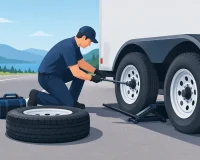
During a tyre emergency, the best and safest thing to do is to call a professional truck tyre service. Mobile tyre technicians can come to your location with the tools and equipment.
They need to do the following:
1. Replacing tyres in an emergency
2. Services for fixing punctures by professionals
3. Mobile tyre fitting on site
4. Checks on the pressure of the tyres
5. Inspections for safety
Many service providers also sell used truck tyres as a cheap way to get new ones quickly.
Having access to reliable mobile tyre repair near means that drivers can get back on the road quickly and with as little downtime as possible.
Conclusion
Truck drivers often have to deal with tyre emergencies, but knowing how to handle them safely can keep them from causing serious accidents and long delays. Drivers can handle roadside emergencies well by staying calm, moving the truck to a safe place, turning on the hazard lights, and calling a professional truck tyre service. Trucks can get help right away when they have problems because they can get reliable 24/7 mobile tyre repair, mobile tyre service near me, and expert puncture repair services. Regular maintenance, checking the alignment of the wheels, and using high-quality tyres are also very important for keeping trucks running safely on long-distance routes and avoiding breakdowns.