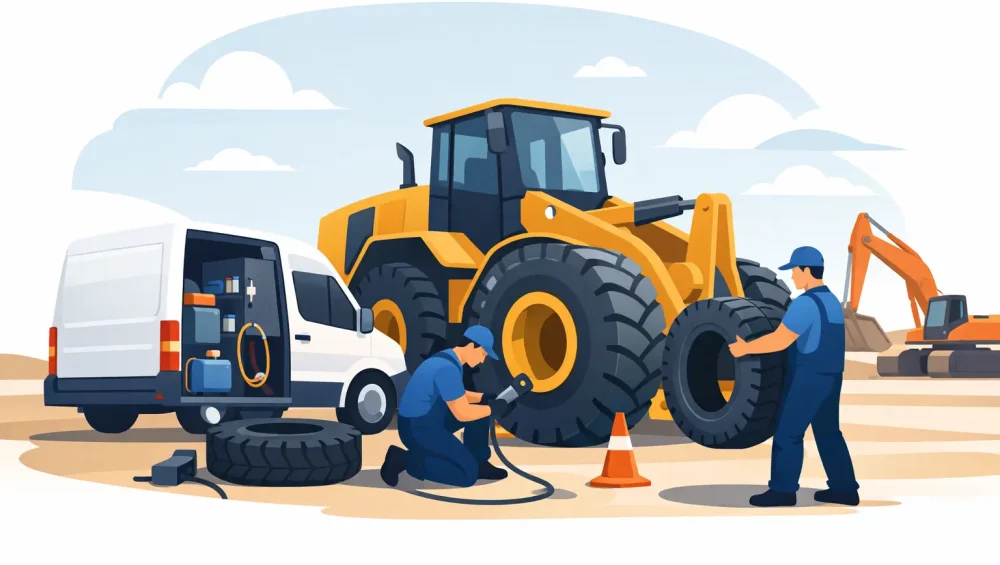
A flat tyre on an earthmover does more than stop one machine. It can hold up a load-out, leave operators waiting, delay deliveries and put the whole job behind schedule. A reliable mobile earthmover tyre service brings the repair, replacement and tyre support to the machine, so your crew can get back to work without organising transport to a workshop.
For quarry work, civil sites, farms, construction projects and remote jobs across the Hunter, time off the job costs money quickly. Hunter Mobile Truck Tyres provides practical on-site tyre support for heavy equipment when and where it is needed, including urgent callouts after hours.
Why mobile earthmover tyre service matters on site
Earthmoving tyres work in punishing conditions. Sharp rock, demolition debris, steel, rutted access tracks, high loads and long operating hours all take their toll. A puncture may be repairable, but sidewall damage, deep cuts or a tyre that has been run flat can turn into a bigger safety and reliability issue.
Taking a loader, grader, excavator attachment, telehandler, tipper or site vehicle off-site for tyre work is not always realistic. It means arranging transport, losing productive hours and potentially leaving a critical part of the operation unavailable. Mobile tyre support changes that equation. A technician comes to your yard, job site, roadside location or remote work area with the equipment and tyre options needed to assess the problem properly.
The immediate benefit is less downtime. The bigger benefit is control. Your supervisor knows what has happened, what can be repaired, what needs replacing and what is required to keep the machine safe for the next shift.
Fast help when an earthmover tyre lets go
A sudden blowout or puncture is rarely convenient. It can happen on a haul road halfway through a shift, at a rural property with limited access, or as a machine is being moved between sites. Waiting until business hours is not an option when the job, operator and other equipment are standing by.
A 24/7 mobile response is designed for these moments. The aim is straightforward: get to the location, inspect the tyre and wheel, make the safest practical repair or fit a suitable replacement. Every job depends on tyre size, damage, access and the machine’s application, so the right solution is not always the quickest-looking one. If a tyre has unsafe casing damage or structural failure, replacement is the responsible call.
When requesting a callout, have the machine type, tyre size, location and a clear description of the damage ready if possible. Photos can also help identify what may be required before the technician arrives. That preparation helps reduce delays, particularly on remote sites or along busy routes such as the Hunter Expressway, Golden Highway and M1.
Repairs where the tyre is still fit for service
Not every puncture means a new tyre. A professional assessment can determine whether the tyre can be repaired safely and returned to work. The repair must suit the location and type of damage, as well as the tyre’s remaining condition. A minor tread-area puncture is very different from a split sidewall, bead damage or a casing damaged by running without enough pressure.
A sound repair can reduce costs and prevent unnecessary tyre replacement. But saving money should never mean putting a compromised tyre back under a loaded machine. Honest advice matters because an earthmover tyre failure can damage the wheel, create site safety risks and cause a far more expensive stoppage later.
Replacement tyres selected for the work
Tyres are not one-size-fits-all, especially on plant and heavy vehicles. A tyre that handles compacted yard work may not suit loose gravel, rough quarry ground, mud, road transfers or high-load tipper operations. Tread pattern, ply rating, load capacity and heat resistance all affect how a tyre performs and how long it lasts.
The best choice depends on how the machine is used. A lower upfront price can be attractive, but it may cost more if the tyre wears too quickly or suffers repeated damage in harsh conditions. In some situations, a quality used tyre is a sensible option for getting equipment back in service quickly. In others, fitting a new tyre is the better long-term investment for reliability and operating life.
On-site tyre fitting means the decision can be made at the machine, based on the actual application rather than guesswork. It is practical support for operators who need a workable answer, not a sales pitch that ignores site conditions.
More than a roadside repair
The strongest mobile tyre support is not only there after a failure. Regular tyre checks can identify issues before they stop the job. Underinflation, slow leaks, uneven wear, damaged valve components and mismatched pressures can all shorten tyre life and affect handling, traction and fuel use.
For fleets and businesses running multiple trucks, tippers, trailers and earthmoving machines, planned tyre management is often the most cost-effective approach. It provides a clearer view of tyre condition across the fleet and makes it easier to schedule replacements before a tyre becomes an emergency.
A practical maintenance program may include pressure checks, tread inspections, rotation where suitable, wheel balancing for applicable vehicles and records of recurring tyre problems. If one unit repeatedly damages tyres, the cause may be the work surface, overloading, alignment, driving habits, wheel condition or the tyre specification itself. Finding that pattern can save far more than reacting to each puncture separately.
What to expect from an on-site tyre callout
A good mobile service starts with clear communication. Once the location and equipment details are confirmed, the technician can prepare for the job and travel to the site. On arrival, the tyre and wheel are inspected to identify the source of the problem and establish whether a repair is safe.
If a replacement is required, the technician fits the appropriate tyre available for the application, checks inflation and ensures the wheel is ready to return to service. For heavy equipment, safe handling procedures matter at every stage. These tyres and assemblies carry serious weight and pressure, so the work needs the right equipment, experience and attention to detail.
Access can affect response time and the work that can be completed on site. Let the service know about gate access, site inductions, soft ground, overhead restrictions, traffic conditions or restricted work areas before arrival. A few minutes of planning can prevent a wasted trip and help get the job done faster.
Supporting Hunter operators where the work happens
The Hunter region covers busy transport corridors, industrial yards, agricultural properties, construction sites and mining-related operations. Equipment does not always fail close to a tyre shop. That is why mobile support is valuable in places such as Newcastle, Maitland, Rutherford, Singleton, Muswellbrook, Cessnock and the surrounding Hunter Valley.
Whether it is a tipper on a tight deadline, an earthmover working a rural property or fleet equipment at a depot, the priority is the same: minimise the time that productive machinery sits still. A responsive local service can also make ongoing fleet support easier, because the provider understands the roads, distances and job conditions operators deal with every day.
Keep tyre trouble from becoming a lost day
Tyres are easy to overlook when the machine is working well. Yet they are one of the most exposed and expensive wear items on any earthmoving operation. Checking pressures at the start of a shift, watching for cuts and abnormal wear, and acting early on slow leaks helps avoid the bigger interruption later.
When a tyre does fail, do not risk running it further or attempting an unsafe temporary fix. Park the machine safely, record the tyre details and arrange professional on-site help. The right mobile earthmover tyre service gets the problem assessed quickly, keeps your people safer and gives your operation the best chance of staying on schedule.
Before the next shift starts, make sure your team knows who to call for fast tyre support. A prompt response can be the difference between a minor repair and a full day of lost production.