A damaged tyre can stop an entire farm run before the load has left the paddock. Agricultural truck tyre repair is about more than fixing a puncture – it is about keeping grain, livestock, produce, feed, machinery and staff moving when timing matters most. During harvest, after rain or ahead of a tight delivery window, a truck sitting still can quickly become an expensive problem.
For farm operators, owner-drivers and fleet managers, the right response depends on the damage, the tyre’s condition and where the vehicle is stranded. A safe repair may get a serviceable tyre back to work. In other cases, replacement is the only sensible option. Knowing the difference helps protect drivers, loads and your schedule.
When agricultural truck tyre repair is a safe option
Not every puncture means the tyre needs to be thrown out. A repair may be suitable where damage is confined to the repairable area of the tread, the tyre carcass has not been compromised and it has not been driven flat for a significant distance. A qualified technician needs to inspect the tyre properly before making that call.
A nail, screw or small penetration through the central tread can often be repaired if caught early. That is why pressure checks matter on agricultural trucks. A tyre losing air slowly may still look usable from the outside, but continuing to run it underinflated builds heat and damages the internal structure. By the time it comes off the rim, a simple repair may no longer be possible.
The repair itself should be completed correctly, not treated as a quick roadside patch that gets forgotten. For heavy vehicles carrying farm loads, the tyre must be assessed from the inside, prepared correctly and checked before being returned to service. The aim is to restore safe operation, not simply to get a few more kilometres out of a tyre that is already failing.
Damage that calls for tyre replacement
Sidewall damage is the major warning sign. Cuts, splits, bulges and deep abrasions in the sidewall generally require replacement because this part of the tyre flexes heavily and cannot be safely repaired in the same way as the tread. The same applies to damage around the bead, separated belts, exposed cords and tyres that have been run flat.
Agricultural routes are hard on truck tyres. Sharp stubble, rocks, fallen branches, gravel roads, rutted access tracks and debris around loading areas all increase the risk of damage. Tipper trucks working between a quarry, farm and road network can face an especially punishing mix of surfaces in one day.
Tyre age and wear also matter. A puncture in a tyre with very low tread, uneven wear or cracking may be technically repairable, but it may not be worthwhile. Spending money on a repair only to face another callout days later is false economy. A good mobile tyre technician will explain the practical options clearly: repair, replace one tyre, fit a matched pair where needed, or plan a wider changeover for the vehicle or fleet.
Do not keep driving on a soft tyre
When a tyre is visibly flat or pressure is dropping quickly, stop as soon as it is safe to do so. Driving on it to reach the next town can destroy the casing, damage the wheel and create a far more serious roadside situation. It may also affect handling, braking and stability, particularly with a loaded trailer or high-centre-of-gravity farm load.
Pull up on firm, level ground where possible, keep clear of traffic and let the tyre cool if it has been running hot. Do not attempt repairs beside a live traffic lane or under an unstable loaded vehicle. A prompt mobile callout is usually safer and faster than trying to make do with unsuitable equipment on the roadside.
Why mobile repairs suit agricultural operations
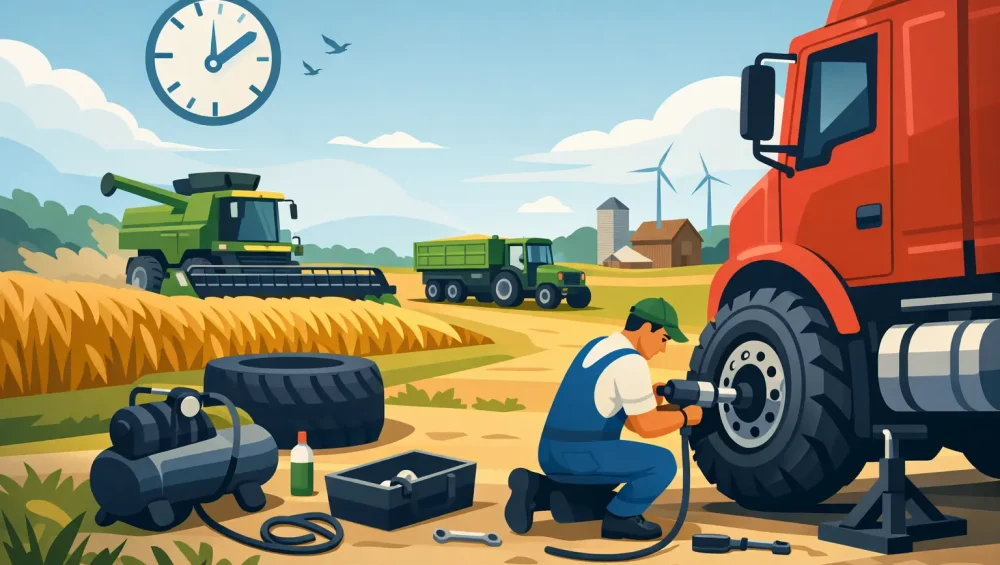
Taking a truck to a tyre shop can mean unhooking trailers, rearranging loads and losing hours of productive time. That is rarely practical when the vehicle is parked at a silo, on a remote property, beside a loading bay or on a regional highway. Mobile agricultural truck tyre repair brings the equipment and experienced hands to the job.
That convenience matters most when the job is time-sensitive. A grain cart cannot wait indefinitely for a road truck. Livestock transport has welfare and scheduling pressures. Perishable produce has a limited delivery window. Even a parked service truck can delay machinery crews, contractors and everyone relying on it.
Hunter Mobile Truck Tyres provides on-site heavy vehicle tyre support across the Hunter region, including emergency puncture repairs, replacement tyres, fitting, pressure checks and blowout recovery. The focus is straightforward: get to the truck, assess the damage properly and get the vehicle safely moving again with as little disruption as possible.
Mobile service also gives operators a better view of what caused the problem. If several tyres show stone drilling, shoulder wear or repeated punctures, the issue may be related to tyre selection, inflation pressures, load distribution or the site access road. Identifying that pattern can prevent the next breakdown rather than simply responding to it.
Pressure, load and road surface all affect tyre life
Farm and freight work puts changing demands on tyres. A truck may travel empty over corrugated dirt roads in the morning, haul a heavy load on bitumen at highway speed in the afternoon, then spend the evening manoeuvring around yards and loading areas. That variation makes tyre pressure management essential.
Underinflation causes excessive heat, sidewall flex and irregular wear. Overinflation can reduce the contact patch, increase impact damage and wear the centre of the tread faster. The correct pressure depends on the tyre specification, axle load, operating conditions and manufacturer guidance. There is no single pressure that suits every truck, trailer and job.
Overloading is another costly issue. It increases heat, stress and the chance of a blowout, especially on hot days or long runs. Even when the truck is within legal limits overall, uneven loading can place extra pressure on individual tyres and axles. Regular checks are a practical part of protecting tyres, not paperwork for its own sake.
Watch for early warning signs
Drivers are often the first to notice a tyre issue. A pull through the steering, vibration, repeated pressure loss, unusual noise or a tyre that looks lower than the rest deserves attention before the next run. At the depot, look for embedded objects, cuts, missing tread, shoulder damage and dual tyres rubbing together.
Uneven wear tells a story as well. Feathering can point to alignment issues, one-sided wear may indicate suspension or axle concerns, and localised damage often comes from site hazards. Catching these signs early gives you more options and reduces the chance of a breakdown on the road.
Keep a practical tyre plan for busy periods
The best time to organise tyre support is before the harvest rush, major livestock movement or a long haulage contract begins. Check tread depth and pressure across trucks and trailers, inspect spare wheels, and make sure drivers know who to contact if a tyre fails after hours. A spare that has not been checked in months is not much help in a roadside emergency.
For fleets, recording tyre repairs, replacements and recurring damage can reveal where money is being lost. If the same route produces frequent punctures, it may be worth improving the access road, changing tyre type or reviewing operating pressures. If one trailer repeatedly wears tyres unevenly, a mechanical inspection can save far more than another replacement tyre.
There is always a balance between getting the most value from a tyre and changing it before it becomes a liability. The right decision depends on the work ahead. A tyre that may be acceptable for low-speed yard work could be unsuitable for a loaded highway run. Honest advice and a proper inspection are what keep that decision simple.
When a tyre problem threatens your next load, act early and choose the safe fix. A fast repair or replacement on site can keep your truck, your crew and your agricultural operation working to plan.