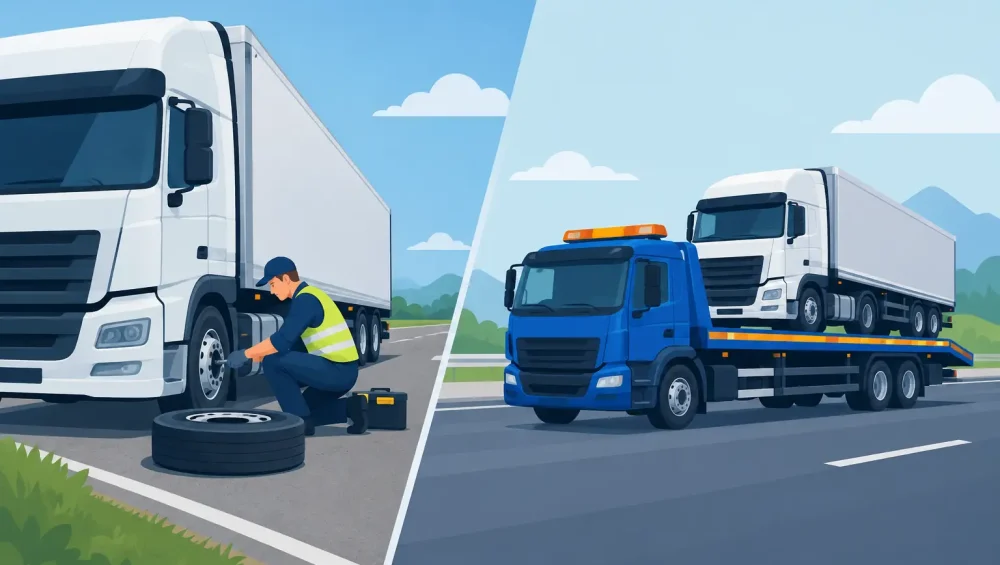
A blown tyre on a loaded truck is not just a tyre problem. It can mean a missed delivery slot, a stranded driver, an unhappy customer and a vehicle earning nothing while it waits. When comparing mobile tyre callout versus towing, the best option usually comes down to one question: can the tyre issue be safely repaired or replaced where the truck is sitting?
For most punctures, damaged tyres and roadside blowouts, an on-site heavy vehicle tyre service gets you moving faster than organising a tow to a workshop. But towing still has its place when the damage goes beyond the wheel and tyre. Knowing the difference helps drivers and fleet managers make a clear decision under pressure.
Mobile tyre callout versus towing: the real difference
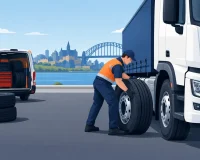
A mobile tyre callout sends a qualified tyre technician and the required equipment to your location. That may be on the M1, the Hunter Expressway, at a depot in Newcastle, beside a work site, or on a regional run near Singleton or Muswellbrook. The technician assesses the tyre, checks the wheel and surrounding components, then carries out a suitable repair or replacement on-site.
Towing moves the entire vehicle, trailer or combination to another location, usually a workshop. It can be necessary, but it adds another stage before the actual tyre work can begin. The truck must be recovered, transported, dropped off, booked in and repaired. If the workshop is busy or closed, the delay can stretch well beyond the original breakdown.
For a tyre-only issue, towing often turns a repair job into a recovery job first. A mobile callout deals with the fault at its source, provided the vehicle is in a safe position and the wheel assembly is suitable for on-site work.
Why a mobile tyre callout usually gets trucks moving sooner
Time off the road is expensive. Owner-drivers lose kilometres and jobs. Transport operators may need to reshuffle loads, drivers and delivery times. Earthmoving and agricultural businesses can have equipment sitting idle while an entire crew waits.
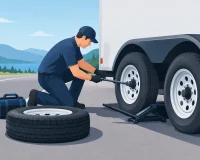
A mobile service cuts out the trip to a tyre shop. Rather than removing a damaged wheel, arranging recovery and waiting in a queue, the technician arrives with replacement tyres, repair equipment and the tools needed for heavy vehicle wheel work. In many cases, the truck can be inspected, fitted with a suitable tyre and back in operation from the breakdown location.
This matters most after hours. A tyre failure at 2 am should not automatically mean leaving a truck and load parked until morning. A 24/7 mobile truck tyre service gives operators a practical option when workshops are shut, the vehicle is too far from town, or a time-critical load cannot wait.
Mobile support can also prevent a smaller issue becoming a bigger one. A driver who notices a slow leak, sidewall damage or badly worn tyre at a depot can arrange a replacement before heading out. That is generally safer, quicker and cheaper than risking a roadside blowout later in the shift.
The cost comparison is bigger than the invoice
It is tempting to compare only the callout fee with the cost of a tow. That does not show the full picture.
A tow can involve recovery charges, distance-based charges, after-hours fees and workshop labour once the vehicle arrives. There may also be costs for a second vehicle, a replacement driver, delayed freight, missed site access or spoiled schedules. For a truck and trailer, the logistics can become more complicated again.
A mobile tyre callout has a travel component too, particularly for remote locations or urgent overnight work. However, when the technician can replace the tyre on-site, the total cost is often easier to control because the vehicle does not need to be moved before repairs begin.
The right choice depends on the job. A simple steer tyre puncture, dual tyre replacement or serviceable wheel repair is often well suited to mobile assistance. A crash-damaged vehicle with steering, suspension or brake damage is a different matter. Choosing a callout where towing is required is unsafe, and choosing a tow for a straightforward tyre issue can create unnecessary downtime.
When towing is the safer option
A mobile technician should never be expected to repair a vehicle that is unsafe to work on or unsafe to drive after the tyre is changed. Towing is the better decision when the problem includes more than tyre damage.
Consider towing if there is:
- visible damage to the axle, suspension, brakes, steering or chassis
- a bent, cracked or badly damaged wheel that cannot be safely fitted or sealed
- a rollover, collision or load-shift incident
- a vehicle position that cannot be made safe for roadside tyre work.
Tyre failure can occasionally cause secondary damage, especially after a high-speed blowout or when a tyre has been driven flat. A proper assessment matters. A good mobile tyre technician will be direct about what can be repaired on-site and when recovery is the safer call.
Safety comes before speed
Getting back on the road quickly only matters if the repair is completed correctly. Heavy vehicle tyres operate under serious loads and pressures. A rushed job, an incorrect tyre fitment or a failure to identify wheel damage can put the driver, other road users and the load at risk.
Before any work begins, the area needs to be assessed. Traffic conditions, road shoulder width, visibility, ground stability, load security and the truck’s position all affect whether roadside work can proceed safely. In some locations, moving the vehicle a short distance to a safer spot may be the first step. In others, recovery may be necessary.
The tyre itself also needs more than a quick look. The technician should check the cause of the failure, inspect the casing where relevant, assess the rim and valve area, and confirm tyre pressure across the affected axle. On dual-wheel setups, the matching tyre should be checked as well. One underinflated or overloaded tyre can quickly place extra stress on its partner.
What a mobile tyre service can handle on-site
Mobile tyre support is not limited to emergency blowouts. For commercial operators, it is also a way to keep routine tyre work out of the workshop queue and closer to the job.
On-site assistance may include puncture repairs where appropriate, new or used truck tyre fitting, blowout recovery, tyre pressure checks, wheel balancing, tyre rotation and fleet tyre inspections. This is useful for trucks, trailers, tippers, long-haul units, agricultural vehicles and site equipment that cannot easily be taken away from work.
For fleets, planned mobile tyre visits can be just as valuable as emergency callouts. Checking pressures, wear patterns and casing condition at the depot helps identify problems before they become a breakdown. It also gives fleet managers a clearer view of which vehicles are wearing tyres too quickly and where maintenance attention is needed.
Hunter Mobile Truck Tyres provides this practical on-site support across the Hunter region, with 24/7 emergency assistance for operators who need a fast, professional response rather than another delay in the schedule.
How to make the right call when a tyre fails
When a tyre goes down, start by protecting people and the vehicle. Pull over only where it is safe to do so, use hazard lights and follow your company’s roadside safety procedure. Do not continue driving on a flat tyre unless moving a very short distance is necessary to escape immediate danger. Driving on it can destroy the casing, damage the rim and turn a repairable problem into a costly replacement.
When booking help, give accurate details: your location, truck or trailer type, tyre size if known, the axle affected, whether the tyre is flat or has blown out, and whether the vehicle is loaded. Mention any visible wheel, brake or suspension damage. Clear information helps the technician arrive prepared with the right tyre and equipment.
If the truck is safe and the problem is limited to the tyre or wheel assembly, a mobile callout is usually the quickest path back to work. If there is structural damage, an unsafe roadside position or doubt about the vehicle’s roadworthiness, arrange towing and have it inspected properly.
The best breakdown decision is the one that protects your driver, your load and your next job. A prompt mobile tyre assessment gives you a clear answer fast, so you can repair on-site when it is safe or organise recovery without wasting valuable hours.