A mobile tyre servicing fleet example is easiest to understand when a truck is loaded, scheduled for work and sitting on the shoulder with a damaged tyre. Every minute spent arranging a tow, finding a workshop or waiting for parts can push deliveries back, disrupt drivers and cost a business far more than the tyre itself.
For heavy vehicle operators, tyre service is not just a maintenance task. It is a practical part of keeping trucks, trailers, tippers and plant moving. A mobile tyre team brings the equipment, replacement tyres and experience to the vehicle, whether it is at a depot, on a job site or beside the road.
A real-world mobile tyre servicing fleet example
Picture a regional transport business running eight prime movers and 14 trailers between Newcastle, the Hunter Valley and the Upper Hunter. The fleet carries mixed loads, including palletised freight, equipment and agricultural supplies. Its vehicles cover long highway kilometres, spend time on rough access roads and often operate outside standard workshop hours.
One morning, a B-double driver notices an inner trailer tyre losing pressure during a pre-start inspection at a customer site. The tyre has a puncture, and the truck is booked for a time-sensitive collection later that day. Sending the combination to a tyre shop would mean breaking the schedule, adding unnecessary travel and leaving the customer short on transport capacity.
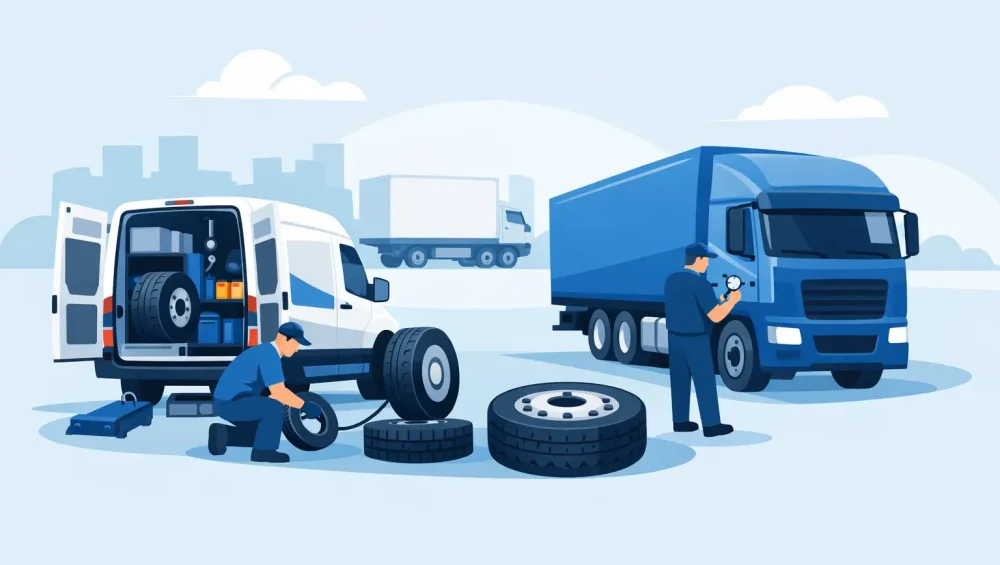
Instead, the fleet manager calls a mobile truck tyre service. The technician attends the site, assesses the tyre and checks the surrounding wheel position for damage or abnormal wear. If the casing is suitable, the puncture is repaired correctly on site. If it is not safe to repair, the technician fits a matching replacement, checks inflation pressures and confirms the wheel is secure before the vehicle returns to service.
The driver stays with the truck. The load stays where it is. The business avoids a tow and gets a clear record of what failed, what was fitted and what should be checked next. That is the value of mobile servicing: less disruption around the repair, not simply a faster tyre change.
What a fleet service plan looks like
Emergency callouts are vital, but the strongest fleet tyre arrangements combine urgent support with regular on-site checks. This gives operators a better chance of finding issues before they become roadside failures.
A technician can inspect tyre pressures, tread condition, valve condition, wheel damage and signs of uneven wear while vehicles are parked at the depot. Rotation, balancing and tyre replacement can be planned around shift changes or downtime rather than forcing a truck off the road during a productive run.
For the example fleet, a sensible arrangement may include fortnightly or monthly inspections depending on kilometres, loads and operating conditions. Vehicles running the M1, Hunter Expressway or Golden Highway may face different wear patterns from tippers working gravel roads, construction sites or quarry entrances. There is no one pressure setting, tyre pattern or inspection interval that suits every heavy vehicle.
The service record matters as much as the inspection itself. It helps identify repeat punctures on a particular route, tyres wearing too quickly on one axle, trailers with alignment concerns or drivers regularly operating with incorrect pressures. Those details allow a fleet manager to make decisions based on what is happening in the field rather than guessing at the next tyre bill.
The difference between a repair and a safe return to work
A flat tyre does not always mean the same solution. Some punctures can be repaired safely when the tyre has not been run flat, the injury is in a repairable area and the internal inspection confirms the casing is sound. Others need replacement because continued use would put the driver, load and other road users at risk.
This is where an experienced mobile technician earns their keep. The quickest-looking fix is not always the right one. A tyre that has been driven while flat may have hidden internal damage, while a damaged sidewall or compromised bead can rule out a repair altogether.
For fleet operators, the priority is getting the vehicle moving again without creating another breakdown 50 kilometres down the road. A proper assessment, suitable tyre selection and accurate inflation are essential. Cheap shortcuts can turn a manageable callout into a second delay, a damaged wheel or a dangerous blowout.
Where mobile tyre service saves the most time
Mobile support is particularly useful where workshop travel is difficult or impractical. A long-haul truck stopped roadside needs a response that comes to it. A tipper at a remote site may lose half a shift travelling to and from town for a tyre issue. A trailer parked at a depot can be serviced before the next driver arrives, rather than being sent out with a known problem.
It also helps businesses with varied operating hours. Freight does not stop because a puncture happens after dark, and many earthmoving, agricultural and transport jobs run early, late or through the night. Access to 24/7 emergency assistance means the callout process is clear when pressure is on.
Hunter Mobile Truck Tyres provides on-site heavy vehicle tyre support for these situations across the Hunter region, including roadside breakdowns, depot work and remote job sites. The focus is straightforward: assess the problem, supply the right tyre solution and help get the vehicle safely back into operation.
Choosing tyres for the work, not just the price
A fleet example also shows why tyre choice should be tied to the job. A steer tyre, drive tyre and trailer tyre each face different demands. Long-distance highway work calls for a different balance of wear, fuel efficiency and handling from work that involves mud, loose stone, frequent turning or heavy site access.
New tyres may be the right option for high-kilometre work, critical axle positions or operators wanting maximum casing life. Quality used truck tyres can be a practical, cost-conscious choice in suitable applications, particularly where the tyre has been inspected and matched to the vehicle’s workload. The right answer depends on legal requirements, tyre condition, axle position, load and how far the vehicle needs to travel before its next planned service.
Fleet managers should also look beyond the purchase price. A tyre that lasts longer, wears evenly and avoids unplanned stoppages may deliver better value than the cheapest option fitted today. Conversely, spending more on a premium tyre is not automatically worthwhile if the vehicle works low kilometres in conditions that do not justify it.
Building a better response before the next blowout
The most effective fleets make it easy for drivers to report tyre trouble. Drivers should know the vehicle location, tyre size where possible, registration or fleet number, axle position and whether the tyre is flat, damaged or has come apart. A clear call saves time before the mobile technician even leaves.
It is also worth keeping tyre details, preferred brands and approval limits on file. That reduces delays when a replacement is needed at night or on a busy day. For larger fleets, nominate who can approve expenditure and who receives the service report, so the driver is not left waiting for multiple phone calls.
Daily walk-around checks remain one of the best defences against roadside tyre failures. Drivers can spot low pressure, sidewall damage, lodged objects, uneven wear and loose-looking wheel hardware before heading onto the highway. Mobile tyre servicing supports those checks, but it does not replace them.
A good fleet tyre arrangement gives drivers confidence that help is available and gives managers more control over cost, compliance and downtime. When a tyre problem hits, act early, give clear details and get qualified on-site support. The best outcome is not merely getting moving again – it is getting back on the road with the confidence to finish the job.