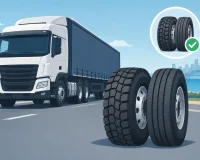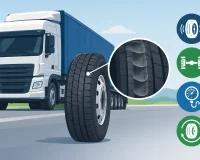
A tyre can look serviceable at a quick glance and still be costing you control, fuel and kilometres. Understanding steer tyres vs drive tyres helps owner-drivers and fleet managers put the right rubber in the right position, spot wear early and avoid an expensive roadside problem.
On a heavy vehicle, every tyre has work to do. But steer and drive positions carry very different loads, forces and safety responsibilities. Fitting a tyre designed for traction where you need precise steering can lead to irregular wear, poorer handling and a shorter service life.
Steer tyres vs drive tyres: the key difference
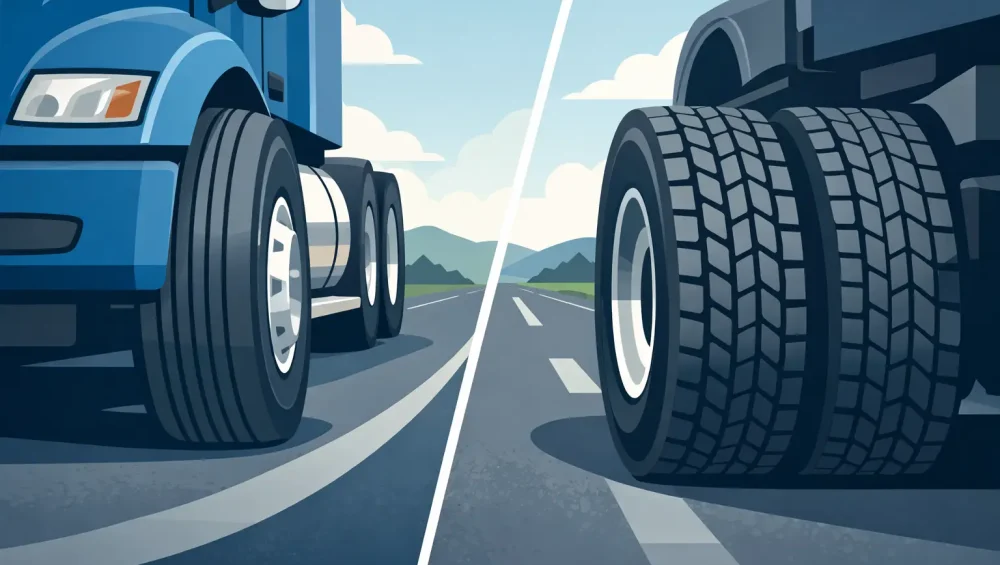
Steer tyres are fitted to the front steering axle. Their main job is to guide the truck accurately, maintain stability and provide dependable braking and wet-weather grip. They need to track straight, respond predictably through bends and hold their shape under the weight carried by the front axle.
Drive tyres sit on the powered axle or axles. Their job is to transfer engine torque to the road. They need traction when pulling away, climbing grades, moving through loose material or handling wet, greasy and uneven surfaces. On a prime mover, that usually means the rear drive axle. On a rigid truck, it depends on the vehicle configuration.
The basic rule is simple: steer tyres are built for directional control, while drive tyres are built to put power down. Both are essential, but they are not interchangeable.
What makes a steer tyre different?
A steer tyre usually has a rib-style tread pattern with grooves running around the tyre. This design helps the tyre roll smoothly, clear water and maintain a stable contact patch with the road. The tread is designed to resist wandering, which matters on long highway runs and when the truck is carrying a heavy load.
Because front tyres are responsible for steering, they are often the first place you will notice mechanical or alignment issues. Feathering along the tread, one-sided wear, cupping or a vehicle that pulls left or right can point to incorrect toe settings, worn steering components, suspension trouble or poor inflation pressure.
A steer tyre also needs a sound casing. Front-axle tyre failure is a serious event because it can affect the driver’s ability to control the vehicle immediately. That is why visible damage, exposed cords, deep cuts, bulges or severe irregular wear should never be treated as a problem for the next service.
Common steer tyre wear patterns
Centre wear often indicates over-inflation, while wear on both shoulders can suggest under-inflation or overloading. One shoulder wearing faster than the other is commonly an alignment or suspension issue. Cupping or scalloping may be caused by worn shocks, loose steering parts or imbalance.
Replacing the tyre alone may get the truck moving, but it does not solve what caused the wear. A practical inspection of pressure, wheel balance, alignment and front-end condition protects the replacement tyre from suffering the same fate.
What makes a drive tyre different?
Drive tyres generally use a deeper, more open tread pattern. The blocks and channels are designed to grip the road surface under torque, helping the vehicle pull loaded trailers, climb steep approaches and maintain traction on wet roads or job sites.
For transport work that stays mainly on sealed roads, a highway drive pattern may provide a good balance of traction, fuel economy and wear. Tipper trucks, earthmoving equipment and vehicles working around farms, quarries or construction sites may need a more aggressive drive pattern. That added grip can be valuable in loose ground, but it may wear faster or run less quietly on long sealed-road kilometres.
Drive tyres cope with a lot of force every time the driver accelerates. Hard take-offs, wheel spin, heavy loads and incorrect pressure can scrub tread away quickly. Once the lugs are worn down or damaged, the truck loses traction where it needs it most.
Watch for drive tyre damage
Drive axle tyres are more likely to pick up stones, metal, screws and site debris because their tread pattern is deeper and more open. Stone drilling, torn lugs, punctures and heat damage all need attention before they become a casing failure or a full blowout.
A matched pair across the drive axle is also important. Significant differences in tread depth, rolling circumference or tyre type can place extra stress on the differential and affect how the truck handles under load. Where possible, keep tyres across the same axle closely matched.
Can you use drive tyres on the steer axle?
Generally, no. A drive tyre should only be fitted to a steer axle if the tyre manufacturer specifically approves it for that position and it meets the vehicle’s load, speed and legal requirements. In normal heavy-vehicle service, dedicated steer tyres are the safer and more sensible choice.
A drive tread can make steering feel less precise, generate more road noise and wear unevenly on the front axle. It may also fail to provide the water evacuation and straight-line stability expected from a purpose-made steer tyre. Saving a few dollars by using an unsuitable tyre can turn into lost kilometres, poor handling and an avoidable replacement bill.
The reverse is also true. A steer tyre on a drive axle may not have enough traction or tread depth to handle torque, particularly in wet weather or off sealed roads. Tyre position ratings matter. Always check the sidewall markings and manufacturer guidance before fitting any truck tyre.
Choosing the right tyre for the job
There is no single best steer or drive tyre for every truck. The right choice depends on axle loads, tyre size, route conditions, load type, expected kilometres and how much time the vehicle spends on highways versus work sites.
A Newcastle-to-Sydney linehaul truck will have different needs from a tipper working around Muswellbrook or a local delivery truck doing frequent stop-start runs. Long-haul operators often prioritise even wear, fuel efficiency and casing durability. Operators on rough access roads may need tougher casings and stronger traction, even if that means accepting a little more rolling resistance.
Used truck tyres can make sense in the right application when the casing, tread depth and repair history have been properly assessed. They are not the answer for every steer position or high-risk job. For critical steering axles, tyre condition and suitability should always come before the cheapest upfront price.
Tyre pressure matters on both axles
Pressure is one of the biggest factors in tyre life, and it is often overlooked until a tyre fails. Under-inflation builds heat, increases shoulder wear and weakens the casing. Over-inflation reduces the contact patch, accelerates centre wear and can make the ride harsher.
The correct pressure is not a guess. It should match the tyre manufacturer’s load and inflation guidance, the axle weight and the way the truck is actually being operated. A vehicle that runs empty one day and fully loaded the next may need a disciplined pressure-check routine to stay within safe operating limits.
Check pressures when tyres are cold, before a long run where possible. If one tyre repeatedly loses pressure, do not just top it up and keep driving. Find the cause. It could be a puncture, valve issue, wheel damage or a developing casing problem.
A practical inspection routine that saves downtime
A quick walk-around before departure can prevent a callout in the middle of a run. Look at each tyre for damage, lodged objects, uneven wear, low pressure and sidewall bulges. Check dual tyres for rubbing or trapped stones, and make sure there is no obvious mismatch in tyre size or tread depth across an axle.
Pay special attention to front steer tyres after hitting potholes, kerbs or rough site entrances. On drive tyres, inspect the tread blocks for tearing and remove loose stones where safe to do so. If the truck starts pulling, vibrating through the steering wheel or losing grip more easily than usual, get it checked before the problem grows.
Rotation and wheel balancing can also extend tyre life when they are appropriate for the vehicle setup. Fleet tyre management is not about making tyres last forever. It is about getting safe, predictable kilometres from every casing and replacing tyres before they create a costly delay.
When a tyre issue cannot wait
A front tyre with sidewall damage, a tyre losing pressure rapidly, exposed cords, a severe tread separation or a blowout requires immediate action. Pull over safely, set up the area properly and do not attempt a repair that is outside your equipment or training.
For drivers and fleets across the Hunter region, Hunter Mobile Truck Tyres provides 24/7 mobile support for punctures, replacements, tyre fitting and blowout recovery at depots, roadside locations and work sites. Getting help to the truck can save the time and risk of trying to limp a damaged vehicle to a workshop.
The right steer and drive tyre setup is not just a technical detail. It is what keeps the truck tracking straight, pulling hard and earning when it should be on the road. Check the wear, match the tyre to the axle and act early when something does not look right.