When a steer tyre starts scrubbing out on one edge or a drive position wears faster than the rest, you feel it in the wallet long before the tyre is fully spent. A proper truck tyre rotation service is one of the simplest ways to get more life from your tyres, keep handling predictable, and avoid pulling a vehicle off the road earlier than planned.
For owner-drivers and fleet managers, that matters. Tyres are a major operating cost, but the bigger hit often comes from downtime. If a truck has to leave a job, miss a run, or sit in a workshop queue just because tyre wear was left too long, the cost goes well beyond rubber. That is why rotation should be treated as planned maintenance, not something you think about only when a tyre looks rough.
Why truck tyre rotation service matters
Truck tyres do not all wear at the same rate. Steer, drive and trailer positions each do a different job, and they cop different loads, road conditions and turning forces. Even on a well-maintained truck, it is common to see one axle wearing faster than another or one side showing a different pattern.
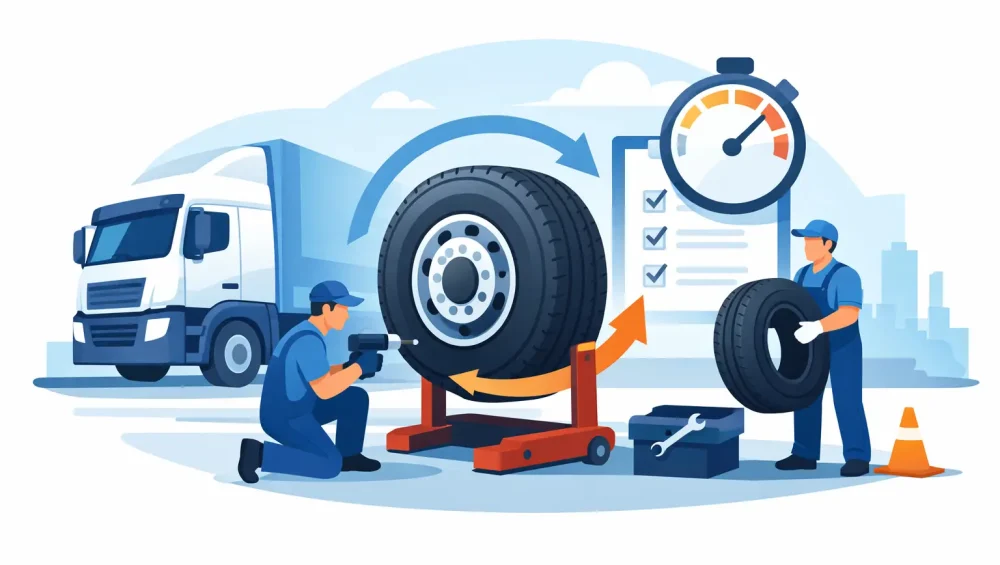
Rotation helps spread that wear more evenly across the set. In practical terms, that can mean longer tyre life, fewer surprise replacements and a more stable vehicle on the road. It also gives a technician the chance to spot related issues early, such as pressure loss, balance problems, alignment concerns or suspension wear.
That last point is where many operators get caught out. Rotation is not a magic fix. If a tyre keeps wearing badly because pressures are off or the alignment is out, swapping positions will only move the problem around. A good service includes inspection and advice, not just shifting wheels.
What a good truck tyre rotation service should include
A proper job starts with checking current wear patterns. There is no point rotating tyres without understanding what they are telling you. Shoulder wear, heel and toe wear, river wear and irregular tread depth can all point to different underlying causes.
From there, the right rotation pattern depends on the vehicle setup. A rigid truck, prime mover, tipper or trailer combination may all need a different approach. Tyre size, tread type, axle role and remaining tread depth also matter. In some cases, rotating within the same axle group makes sense. In others, moving tyres between positions will deliver better value. It depends on the truck and how it is used.
A quality service should also include pressure checks, a look at valve condition, wheel balancing where needed, and confirmation that the tyres being rotated are actually suitable to pair together. Mismatched wear or diameter across certain positions can create more trouble than it solves.
That is why experienced heavy vehicle tyre technicians matter. The goal is not to tick a maintenance box. The goal is to get safe, even, cost-effective use from every casing.
Signs your truck needs tyre rotation
Some operators rotate on a fixed schedule. Others wait until wear is visible. The best approach is usually somewhere in the middle – regular inspections backed by action before wear gets expensive.
If the steering feels different, if one tyre is wearing quicker than the one beside it, or if you are replacing the same position over and over, it is time to act. Uneven tread depth across an axle, visible scrubbing, vibration through the wheel or a truck that does not feel settled on the road are all warning signs.
Fleet operators should also look at the data. If one class of vehicle is burning through steer tyres early or trailers are not delivering the mileage expected, rotation schedules may need tightening up. A small change in maintenance timing can make a noticeable difference across multiple vehicles.
On-site truck tyre rotation service saves time
Taking a truck into a workshop for tyre work sounds manageable until it starts chewing through the day. There is travel time, waiting time, job disruption and sometimes the knock-on effect of missed deliveries or delayed site work. For transport and earthmoving businesses, that is dead time you do not get back.
That is where mobile service makes real sense. On-site rotation means the work can be done at your depot, yard, job site or wherever the vehicle is parked safely. For busy operators across the Hunter, it is often the quickest way to keep a truck working without adding another workshop booking to the week.
Hunter Mobile Truck Tyres provides this kind of practical support because the industry does not stop for tyre maintenance. If a vehicle is available for a short service window, the tyre work needs to happen then and there. Fast response and on-site capability are not just convenient – they help protect your schedule.
Truck tyre rotation service for fleets
For fleets, rotation works best when it is part of a bigger tyre management plan. Waiting until drivers report a problem is usually too late. By then, the uneven wear is established and the cheapest kilometre has already been lost.
A planned service schedule gives you more control over replacement timing, helps balance wear across the fleet and reduces the chance of emergency failures. It also makes budgeting easier. Instead of random tyre spend hitting at the worst possible time, you can manage maintenance with more certainty.
There is a trade-off, though. Rotating too often can add labour cost without enough return, especially on vehicles with consistent wear patterns and shorter service cycles. Leave it too long, and you miss the chance to correct wear before it becomes permanent. The right interval depends on the work the truck is doing, the roads it runs on, the loads it carries and how closely tyre pressures are monitored.
That is why a one-size-fits-all answer rarely works. A highway prime mover doing steady linehaul work has different tyre demands from a tipper running mixed surfaces or a trailer working in and out of regional sites.
Rotation helps, but it is not the whole story
If you want the best result from tyre rotation, a few basics need to be right. Pressure is the big one. Underinflation and overinflation both shorten tyre life, and no rotation plan can offset poor pressure management for long.
Wheel balance matters too, particularly on steer positions where vibration and irregular wear can show up quickly. Alignment is another major factor. If a truck is pulling slightly or scrubbing tyres on the road, the wear pattern will return after rotation unless the root cause is fixed.
Then there is casing condition. Some tyres are worth preserving because they have strong remaining life or retread value. Others may be too far gone, too damaged or too unevenly worn to justify rotating. A technician should tell you honestly which is which.
That straight advice is important. Good tyre service is not about selling extra work. It is about helping operators make the call that saves money and keeps vehicles safe.
When to book a truck tyre rotation service
The best time to book is before uneven wear becomes obvious from across the yard. If your trucks are due for routine maintenance, if a driver has mentioned handling changes, or if tyre life is dropping off faster than expected, that is the time to get it checked.
It also makes sense after seasonal workload changes. Trucks doing heavier runs, longer distances or rougher site access can show different wear patterns quickly. A rotation and inspection after those periods can stop small issues turning into expensive ones.
For regional operators, mobile support is especially valuable when workshop access is limited or the vehicle is working away from base. Being able to get tyre work done on-site keeps jobs moving and reduces the hassle of pulling equipment off the road just for maintenance.
A smarter way to protect tyre life
Tyres wear. That part is unavoidable. What you can control is how evenly they wear, how early problems are picked up, and how much downtime gets attached to each maintenance decision.
A reliable truck tyre rotation service gives you that control. It helps you get more from every tyre, keeps trucks safer and steadier on the road, and cuts the wasted hours that come from preventable tyre issues. If your vehicles are due, do not wait for a worn edge or a roadside problem to make the decision for you. Get the tyres checked, rotate them properly, and keep the job moving.