A damaged rim can turn a routine tyre issue into a roadside stoppage, a load delay or a serious safety risk. Truck rim safety is not just about how the wheel looks at pre-start. It is about whether the rim, wheel nuts, tyre and mounting components can keep working safely under heavy loads, long highway runs, rough access roads and repeated braking.
For owner-drivers and fleet operators, the cost of ignoring a suspect wheel is rarely limited to a replacement rim. A slow leak can destroy a tyre. Loose wheel nuts can damage studs and mounting faces. A cracked or distorted rim can lead to sudden air loss when the truck is loaded and far from a workshop. Catching problems early keeps trucks on the road and helps protect drivers, other road users and your delivery schedule.
Why truck rim safety needs attention
Truck rims carry enormous forces every kilometre. They support the tyre under load, transfer braking and driving forces, and absorb impacts from potholes, kerbs, quarry tracks and rough job sites. Even a small defect can worsen quickly once heat, vibration and load are added.
A rim may be steel or aluminium, but neither is immune to damage. Steel wheels can corrode, crack or bend. Aluminium wheels can crack, lose material around stud holes or suffer damage from incorrect fitting. In either case, the wheel must seal properly with the tyre and sit squarely against the hub.
The risk is higher when a vehicle is regularly overloaded, operating on unsealed roads, hauling through construction sites or travelling long distances with little downtime. It also rises after a blowout, impact or tyre failure. A tyre may be replaced after the event, but the rim and wheel-end components need checking as well.
The warning signs drivers should not ignore
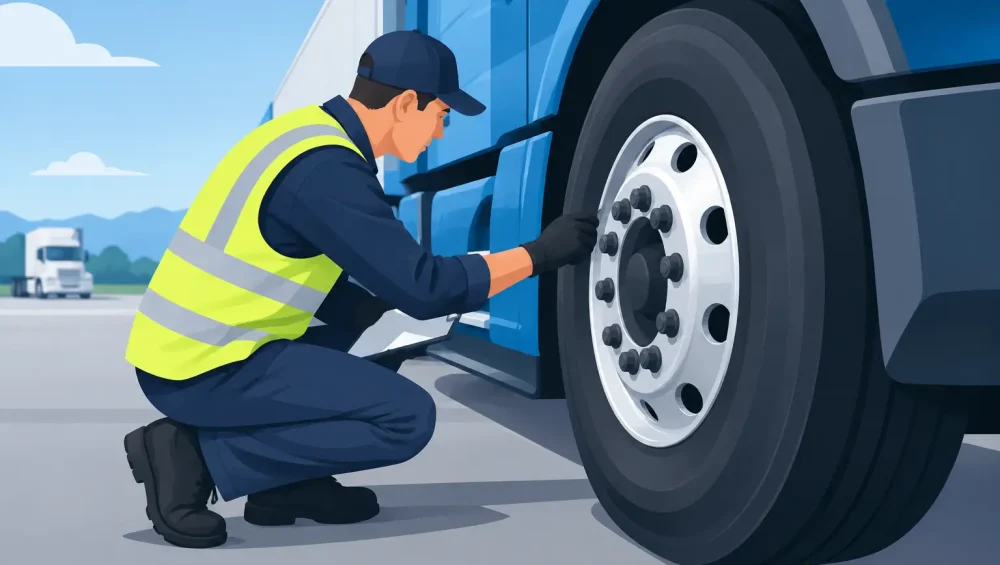
A proper inspection does not need to slow down a busy start to the day. Walk around the truck before departure and look closely whenever tyres are being checked. Pay attention to new vibrations, steering pull, uneven tyre wear or repeated pressure loss. They are often early warnings rather than minor annoyances.
Look for visible cracks, especially around the valve area, stud holes, welds and rim edges. Check for dents, flat spots, bent flanges, rust scale, gouges and damage caused by contacting kerbs or rocks. If the rim has been struck hard enough to damage the tyre, treat the wheel as suspect until it has been inspected.
Also look for rust streaks around wheel nuts, shiny metal around mounting faces, missing or damaged nuts, and any signs that nuts have moved. These can point to a loose wheel. A loose wheel is an urgent issue. Pull over safely and arrange qualified assistance rather than trying to continue to the next stop.
Air loss deserves the same attention. A tyre that needs regular topping up may have a puncture, valve fault, bead leak or rim corrosion. Continued operation at low pressure creates heat, weakens the tyre and can turn a repairable problem into a casing loss or blowout.
Build rim checks into every tyre inspection
The best time to inspect a rim is when the tyre is off, but regular external checks still make a real difference. During scheduled tyre maintenance, the wheel should be cleaned enough to inspect critical areas and checked for run-out, cracks, corrosion and damage that could affect tyre seating.
Tyre pressure checks matter here too. Correct pressure helps the tyre hold its shape and protects the rim from hard impacts. Underinflated tyres flex excessively and generate heat. Overinflation can reduce the tyre’s ability to absorb road shock. The right pressure depends on the tyre, axle load, application and manufacturer guidance, so do not rely on a one-size-fits-all figure.
Wheel balancing and rotation can also help identify issues before they become expensive. A vibration that appears at speed may come from tyre imbalance, irregular wear, a bent rim or another wheel-end fault. Treating vibration as normal is a good way to wear out tyres early and put extra strain on suspension components.
For fleets, record defects by vehicle and wheel position. If the same wheel location repeatedly develops pressure loss, damage or irregular wear, there may be an underlying mechanical, loading or route-related problem that needs attention.
Correct wheel fitting is part of truck rim safety
A good rim can still become unsafe when it is fitted poorly. The mounting surfaces must be clean and suitable, the correct nuts and components must be used, and wheel nuts must be tightened to the vehicle manufacturer’s specified torque using calibrated equipment. Guesswork, damaged threads and mixing incompatible wheel components can create a dangerous wheel-off risk.
Do not assume a wheel is secure because the nuts look tight. Incorrect tightening sequence or torque can cause uneven clamping. It may allow the wheel to settle after installation, particularly following the first kilometres of operation. Follow the manufacturer’s requirements for post-fitment checks and re-torque procedures.
Never mix wheel parts simply because they appear to fit. Rim profiles, offsets, stud patterns, nut seats and load ratings must match the application. A wheel that is not rated for the axle load or operating conditions can fail even if the tyre itself is in good condition.
Tyre fitment is equally important. The tyre size and type must be approved for the rim, and the bead area must be clean and undamaged. Forcing a tyre onto the wrong rim or using unsuitable components can prevent correct seating and create an air-loss hazard.
Multi-piece rims demand specialist handling
If your truck, trailer, agricultural equipment or plant uses multi-piece rims, do not treat tyre work as a quick roadside job. These assemblies can be extremely hazardous if they are damaged, incorrectly assembled or inflated without the correct procedures and safety equipment.
Only trained technicians should disassemble, inspect, fit and inflate multi-piece wheel assemblies. Components must be matched, locking rings inspected, and inflation carried out with the appropriate restraint equipment and procedures. A cracked ring, incorrect component match or poor seating can have catastrophic consequences.
If there is any doubt about the wheel type, its condition or the correct assembly process, stop and get professional help. Saving a few minutes is never worth exposing a driver or worker to that level of risk.
What to do after a blowout or hard impact
After a blowout, pothole strike or kerb impact, inspect more than the tyre. Check the rim flange, bead seat, valve, wheel nuts and visible suspension components. Watch for vibration, pull or air loss once the spare or replacement tyre is fitted.
Do not try to straighten, weld or repair a damaged rim unless it is assessed and repaired by a properly qualified specialist using an approved process. Some damage makes a rim unsuitable for repair, particularly cracks around highly stressed areas or damage that affects structural integrity. The safest option may be replacement.
If you are stopped roadside with a damaged wheel in the Hunter, Newcastle or on a long haul route through the region, mobile support can keep the recovery process moving. Hunter Mobile Truck Tyres can inspect the tyre and wheel situation on-site, carry out suitable tyre work and help you make a practical call on whether the vehicle can safely return to service.
Simple habits that prevent costly wheel trouble
The most reliable approach is consistent rather than complicated. Check pressures when tyres are cold where practical, inspect wheels during pre-starts, and report vibration or recurring air loss straight away. Keep axle loads within limits and take extra care after rough-road work, kerb contact or a blowout.
For fleet managers, planned mobile tyre inspections reduce the chance that a minor rim issue turns into an emergency callout. They also make it easier to track tyre wear, pressure problems and recurring wheel faults across trailers and prime movers.
A truck wheel does not need to look dramatic to be unsafe. If a rim is cracked, bent, corroded around the bead, losing air or showing signs of loose mounting, park it up and have it checked. That decision can protect the tyre investment, the load and the people sharing the road with your truck.