A blown truck tyre on the M1 or a puncture at a remote job site is never just bad luck. Proper tyre failure analysis identifies what caused the damage before the replacement tyre goes on. For owner-drivers and fleet operators, that matters because the same underlying issue can quickly damage another tyre, delay a load and put a vehicle back off the road.
A failed tyre leaves clues. The tread, sidewall, inner liner, bead and wheel condition can point to underinflation, impact damage, overload, heat, a mechanical fault or a repair issue. Finding the real cause is how operators reduce repeat callouts and protect their tyre investment.
Why tyre failures need more than a quick replacement
When a heavy vehicle is stopped on the roadside, getting it moving safely is the first priority. A quality replacement or repair can get the job done fast. But when a tyre has failed unexpectedly, particularly more than once on the same axle, the job should not end there.
Replacing a tyre without checking why it failed can mask a bigger problem. A trailer with an alignment issue may scrub through the shoulder of a new tyre. A slow leak can lead to heat damage and separation. A sharp object may have caused the puncture, but if the tyre was already running soft, its construction may have been weakened well before the object was found.
For fleets, the cost is larger than the tyre itself. There is driver downtime, missed delivery windows, recovery costs, potential rim damage and the disruption of reshuffling a job. A practical inspection after a failure helps prevent the next one occurring on the next run.
What a tyre failure analysis looks for
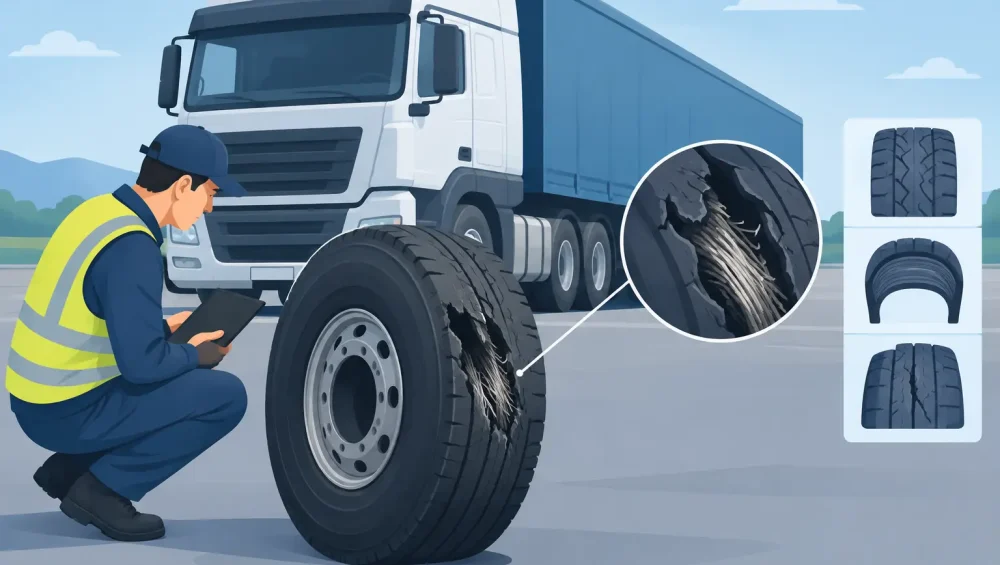
A useful assessment starts before the damaged tyre is removed. The technician checks the tyre’s position on the vehicle, pressure where possible, load conditions, tread wear across the axle and visible damage to the wheel or surrounding components. The location and shape of the failure are often the strongest evidence.
Punctures and penetrations
A nail, screw, wire or sharp stone can cause an obvious air loss. However, the hole alone does not always tell the whole story. A puncture through the repairable tread area may be repairable if the tyre was not driven flat and the internal structure remains sound.
If the tyre has been run underinflated, the inside can show scuffing, wrinkling or heat damage. In that case, a simple plug is not a safe answer. The casing may have suffered damage that cannot be seen from the outside, especially on a loaded truck or trailer.
Underinflation and heat damage
Low pressure is one of the most common causes of premature truck tyre failure. A tyre carrying heavy weight with insufficient air flexes excessively. That flexing generates heat, and heat breaks down the tyre from the inside out.
Warning signs can include a damaged inner liner, separated belts, a softened or distorted sidewall, and irregular wear across both shoulders. Slow leaks, faulty valve hardware and skipped pressure checks can all lead to the same result. Tyre pressure checks are a simple maintenance task, but they make a major difference to casing life and fuel use.
Overloading and poor load distribution
Tyres are built to carry a specified load at a specified pressure. When a truck, tipper, trailer or agricultural vehicle is overloaded, or the load is unevenly distributed, one tyre can carry more than its share. That raises internal temperature and places extra stress on the casing.
Overload-related damage may look similar to underinflation, so the vehicle’s actual operating conditions matter. A tyre can be correctly inflated for a normal run yet still be unsuitable for the load it carried that day. Matching tyre selection, inflation pressure and axle weights is essential, especially for vehicles moving quarry material, machinery or heavy freight.
Impact and road hazard damage
The Hunter region has highways, rough access roads, construction zones and rural work sites where impacts are part of the job. Potholes, kerbs, rocks and debris can cut a sidewall, bruise the casing or crack a wheel.
Sidewall damage is particularly serious because there is less protective rubber than in the tread area. A bulge, deep cut or exposed cords normally means the tyre needs replacement. Continuing to run it can turn manageable damage into a roadside blowout.
Uneven wear and mechanical faults
Uneven tread wear is often a vehicle issue showing up through the tyre. Feathering, one-sided shoulder wear, cupping and diagonal wear can indicate wheel alignment problems, worn suspension components, loose bearings, axle issues or poor rotation practices.
A replacement tyre fitted to a faulty position will wear the same way. This is why tyre failure analysis should include a look at the other tyres on the axle. Comparing wear patterns across the vehicle can reveal whether the failure was isolated or part of a wider maintenance problem.
Bead, wheel and fitting damage
The bead is the section that seals the tyre to the rim. Damage here can cause air loss or make correct seating impossible. Corrosion, bent rims, incorrect wheel components and poor fitting procedures can all create problems at the bead.
This is another reason heavy vehicle tyre work should be handled by trained technicians with suitable equipment. Tyres and wheels operate under serious pressure. Safe fitting, wheel inspection and correct inflation procedures protect the driver, the technician and the vehicle.
The right response after a truck tyre failure
The safest immediate response depends on the failure and location. If there is a blowout, pull up as safely as conditions allow, use warning equipment and avoid driving further on a flat or damaged tyre. Driving on it can ruin a casing that may otherwise have been assessed for repair or retreading, and it can also damage the wheel.
When mobile tyre support arrives, give clear details: vehicle type, tyre size if known, axle position, location, the nature of the damage and whether the vehicle is loaded. This helps ensure the right replacement tyre, tools and equipment are sent to the job.
After the vehicle is mobile, ask whether the failed tyre can be inspected and whether the remaining tyres show related wear. For a one-off road hazard puncture, the answer may be straightforward. For repeated failures, steer-axle wear or trailer tyre damage, a broader check is worth the time.
Preventing repeat failures across a fleet
The most effective tyre programmes are not complicated. They are consistent. Drivers need a simple pre-start habit of checking tyre condition, obvious cuts, lodged objects and visibly low tyres. Fleet maintenance teams need reliable pressure records, scheduled rotations where suitable, alignment checks and a clear process for reporting damage.
It also pays to record every roadside failure. Note the date, tyre position, tyre age, pressure, load, damage type and repair outcome. Over time, patterns become clear. A particular route may be collecting punctures, a trailer axle may need attention, or a certain operating pressure may not suit the work being done.
Used truck tyres can be a cost-effective option when selected carefully for the application and checked properly before fitting. New tyres may make more sense for high-mileage steer positions, demanding long-haul work or applications where maximum casing life is the goal. There is no single choice for every vehicle. The right tyre depends on load, road surface, distance, axle position and how critical uptime is to the operation.
Fast on-site help when the road cannot wait
A tyre failure does not always happen near a workshop. That is where mobile service makes practical sense. Hunter Mobile Truck Tyres provides on-site support for heavy vehicles, trailers and commercial fleets, including emergency replacement, puncture repair, tyre fitting, wheel balancing and pressure checks.
Whether the truck is at a depot, on the Hunter Expressway, at a farm, quarry or roadside location, the priority is to get the vehicle safely moving with the right tyre solution. Once the immediate job is handled, a proper look at the failed tyre can help stop the same issue taking another vehicle out of service.
The next damaged tyre is a chance to find the cause, not just replace the evidence. Act on the wear pattern, pressure issue or mechanical warning while the clues are clear, and your truck has a better chance of staying where it earns its keep – on the road.