A loaded truck can feel completely normal at the start of a run, then develop a soft tyre, rising temperatures and poor handling kilometres down the road. Tyre pressure loss is not just an inconvenience for heavy vehicles. It can turn into a roadside breakdown, damaged casing, blown tyre, missed delivery or an unsafe situation for the driver and everyone nearby.
For owner-drivers, earthmoving operators and fleet managers, the goal is simple: find pressure issues early and act before the tyre is ruined. A mobile tyre response can get you moving again when trouble hits, but regular checks are what help prevent avoidable downtime in the first place.
Why tyre pressure loss is a serious heavy vehicle problem
A truck tyre is designed to carry a specific load at a specific pressure. When pressure drops, the sidewall flexes more than it should. That extra flexing creates heat, and heat is one of the fastest ways to damage a tyre internally.
On a prime mover, tipper, trailer or long-haul combination, even a small pressure loss can have a bigger effect than drivers expect. The tyre may wear unevenly, steering can feel vague, fuel use can climb and the vehicle may pull under braking. Leave it long enough and the casing can fail beyond repair.
The risk is higher when the vehicle is heavily loaded, travelling at highway speed, working on rough access roads or repeatedly stopping and starting on site. A tyre that might survive a short local run while slightly low can quickly overheat on the M1, Hunter Expressway or Golden Highway.
There is also a cost issue. Replacing one damaged tyre is frustrating. Replacing a tyre, repairing collateral mudguard or trailer damage, arranging recovery and losing a day’s work is a much bigger hit. For fleets, repeat underinflation also shortens tyre life across the whole operation.
Common causes of tyre pressure loss
Not every soft tyre has a dramatic puncture. Slow leaks are common, and they are often missed because the vehicle remains driveable at first. Finding the cause matters. Simply adding air without checking why the pressure dropped can set the same tyre up for another failure.
Punctures and road damage
Screws, nails, wire, sharp stone and scrap metal are regular causes of pressure loss. Construction sites, quarry entrances, farm tracks, depots and industrial areas can be hard on tyres. A puncture through the tread may be repairable if it is found early and the tyre has not been run underinflated.
Damage to the sidewall is different. Sidewall cuts, deep impacts and bulges are serious because that area flexes constantly. Do not treat a sidewall problem as a quick top-up and keep-going job. It needs professional assessment.
Valve, rim and bead leaks
A valve core can loosen, a valve stem can crack or a damaged valve cap can let dirt and moisture in. These small parts can cause a slow, stubborn leak that becomes obvious only after several days.
Rims can also be the issue. Corrosion, bent rims, cracks or damage around the bead seat can prevent the tyre from sealing properly. On multi-piece wheels, wheel work must be carried out by trained people using the correct procedures. It is not a roadside shortcut job.
Overloading and incorrect operating pressure
Tyres do not have one magic pressure for every job. The correct cold pressure depends on tyre size, construction, axle position and actual load. A truck that runs empty one day and carries a full load the next may need different pressure settings in line with the tyre manufacturer’s recommendations and the vehicle’s operating requirements.
Overloading creates extra heat and stress even when tyres are correctly inflated. Add low pressure to an overloaded axle and the chance of casing damage rises sharply. This is why fleet tyre management should sit alongside load management, not apart from it.
Heat, ageing and hidden damage
Australia’s warm conditions, long highway stretches and hard commercial work all add heat to heavy vehicle tyres. Heat does not always cause the original leak, but it makes low-pressure damage worse.
Ageing tyres can develop cracking, deteriorated valves or weaker casings. Previous impacts with kerbs, potholes and site debris can also cause internal damage that is not obvious from a quick walk-around. If a tyre is regularly losing air with no visible puncture, it needs a proper inspection.
Warning signs drivers should not ignore
Drivers are often the first line of defence. A pre-start inspection takes only a few minutes, yet it can prevent a much longer delay later in the shift.
Look for tyres that appear lower than those beside them, especially dual tyres where one tyre can hide the problem. Check for foreign objects in the tread, cuts, exposed cords, cracking, bulges, damaged valves and signs of rubbing. On dual assemblies, check for stones trapped between tyres, as they can work their way into the casing.
While driving, pay attention to a change in steering response, a pull to one side, vibration, thumping, unusual tyre noise or a vehicle that feels less stable than normal. A trailer tyre issue may not be felt through the steering wheel, so mirrors and regular stops matter.
Do not judge pressure by kicking the tyre or looking at the sidewall alone. Heavy vehicle tyres can be significantly underinflated before they look obviously flat. Use a reliable, suitable pressure gauge when tyres are cold, and record results as part of normal maintenance.
What to do when a truck tyre is losing pressure
If you suspect tyre pressure loss, reduce speed smoothly and find a safe place to stop as soon as practical. Avoid harsh braking, sharp steering and continuing at highway speed to reach the next depot. The longer a tyre runs low, the more likely an otherwise repairable puncture becomes a replacement job.
Once stopped safely, inspect without putting yourself in danger from traffic or unstable ground. Do not place hands near damaged tyres or attempt to remove an object that is still sealing the puncture. Do not inflate a visibly damaged, bulging or severely deflated tyre and assume it is safe to use.
A sensible roadside response involves four steps:
- Secure the area and use required warning equipment before inspecting the vehicle.
- Check the tyre, valve and wheel for visible damage, but keep clear of traffic and wheel danger zones.
- Confirm whether the tyre is losing pressure quickly, has a puncture, or shows signs of structural damage.
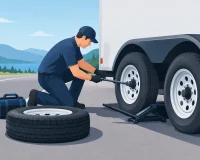
- Arrange qualified mobile tyre support if the tyre cannot be safely returned to service.
For operators across the Hunter region, Hunter Mobile Truck Tyres provides 24/7 mobile assistance for puncture repairs, tyre replacement, blowout recovery and on-site fitting. Bringing the technician to the truck, trailer or job site reduces the time and risk involved in trying to nurse a damaged tyre to a workshop.
Preventing repeat tyre pressure loss
The best prevention is not complicated, but it has to be consistent. Make cold-pressure checks part of every pre-start routine, particularly before long runs, heavy loads or remote work. Check the spare as well. A spare with no usable pressure is not a backup when you need it most.
Keep valve caps fitted and replace damaged valve components promptly. During tyre service, ask for rims, beads and wheel hardware to be checked as well as the tyre itself. If one position has repeated pressure issues, investigate the wheel and operating conditions rather than fitting another tyre and hoping for a different outcome.
For fleet vehicles, pressure records reveal patterns. If the same axle position repeatedly loses air, wears shoulders or develops heat damage, there may be an alignment, loading, suspension or wheel issue behind it. Rotations, balancing and scheduled inspections can extend tyre life, but only if the root cause is addressed.
Tyre pressure monitoring systems can also help on higher-utilisation vehicles. They are useful for spotting changes while the vehicle is operating, though they do not replace physical inspections. Sensors can alert the driver, but a trained inspection still determines whether the tyre is safe, repairable or due for replacement.
A tyre does not need to be completely flat to cost you money. Treat the first sign of pressure loss as a reason to check, not a reason to push on. A quick on-site inspection today can keep your truck loaded, safe and earning tomorrow.